
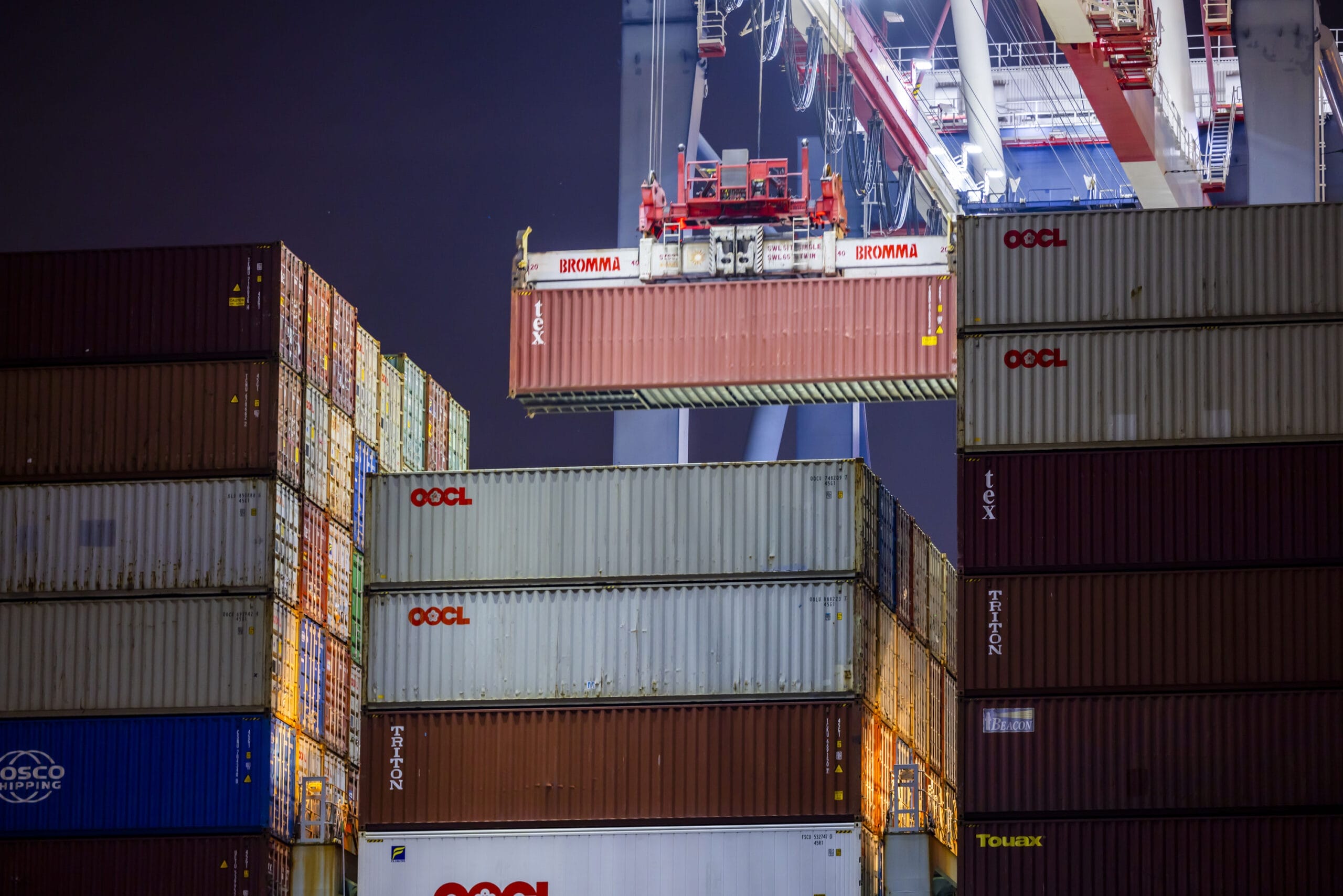
Las carretillas elevadoras STS totalmente eléctricas en acción:
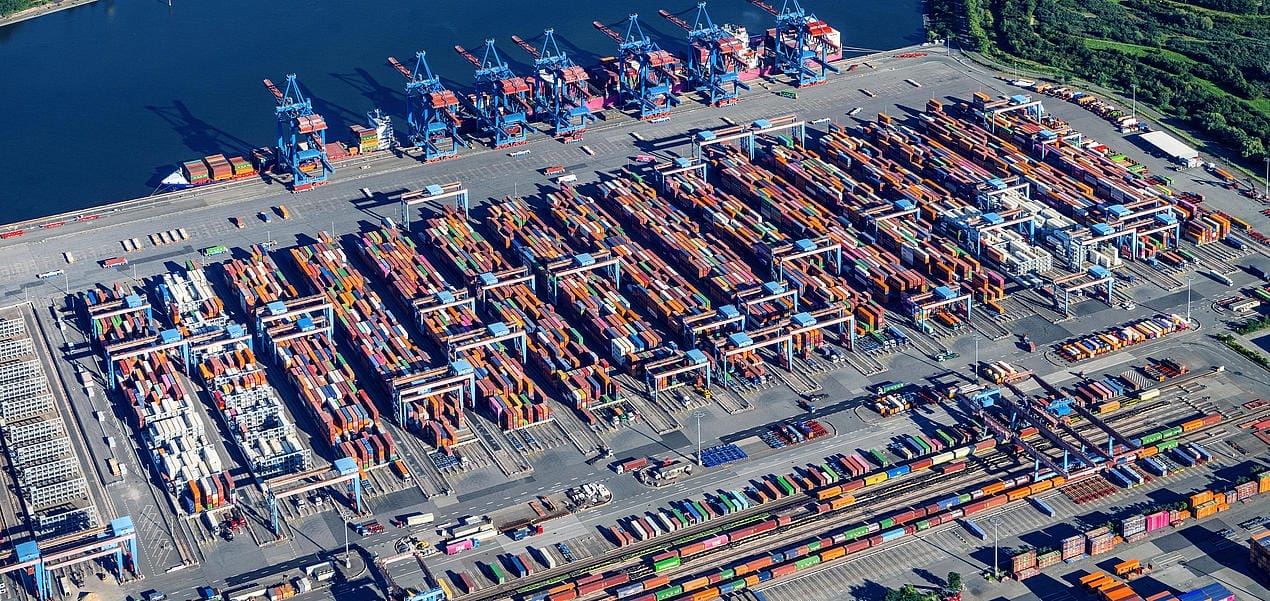
Terminal de contenedores de HHLA en Altenwerder (CTA), Hamburgo
Resumen operativo

Cliente: HHLA Container Terminal Altenwerder (CTA)
Ubicación: Puerto de Hamburgo, Alemania
Posicionamiento: Avanzamos hacia la terminal de contenedores más automatizada y neutra en emisiones de CO₂ de Europa gracias a la tecnología de grúas y spreaders totalmente eléctricos.

EL RETO
Alto nivel de automatización y sostenibilidad
La terminal de contenedores de HHLA en Altenwerder se encuentra en plena fase de sustitución de sus grúas STS originales por una nueva generación de unidades de doble carro altamente automatizadas y controladas a distancia de Liebherr. CTA es también una de las primeras terminales de Europa que está trabajando para obtener la certificación de neutralidad en emisiones de CO₂, tras haber electrificado ya su flota de vehículos guiados automáticamente (AGV), los camiones de remolque y los spreaders de las grúas de patio. El siguiente reto era la zona ribereña.
Entorno con altas exigencias: En un entorno de terminal totalmente automatizado, las grúas carecen de cabina de operador en el carro principal. Los equipos deben funcionar de forma fiable y continua sin intervención humana a nivel del spreader.
Paridad de rendimiento: HHLA CTA exigía que las grúas eléctricas igualaran o superaran el rendimiento de las hidráulicas tradicionales en cuanto a velocidad de funcionamiento, durabilidad estructural y ciclo de vida total.
Requisito medioambiental: La eliminación del aceite hidráulico era un requisito estratégico, no solo para la cadena de suministro de carbón, sino también para eliminar por completo el riesgo de derrames de aceite en los buques, en los muelles y en el puerto de Hamburgo.
Competencias y adecuación al mantenimiento: A medida que los equipos portuarios se vuelven cada vez más automatizados y electrificados, resulta cada vez más difícil encontrar técnicos hidráulicos cualificados. HHLA necesitaba una plataforma de spreader que se ajustara a las competencias electromecánicas modernas de los que disponen sus equipos de mantenimiento.
LA SOLUCIÓN
La transición hacia la movilidad totalmente eléctrica a orillas del mar
HHLA ya había adoptado de forma generalizada el uso de spreaders totalmente eléctricos para las grúas pórtico de patio en todas sus terminales de Hamburgo. El STS45E G2 supone la ampliación de esa estrategia a la zona de muelle y marca la primera implantación en Europa del spreader STS eléctrico de segunda generación de Bromma.
Tecnología: El modelo STS45E G2 de Bromma es totalmente eléctrico, lo que elimina por completo el uso de aceite hidráulico y sustituye todos los sistemas de accionamiento por motores eléctricos. Las interfaces del spreader están diseñadas para comunicarse directamente con las plataformas de automatización de las grúas, lo que permite un control preciso y repetible de los movimientos.
Validación: Las revisiones técnicas confirmaron que el sistema de accionamiento eléctrico de las paletas ofrecía el perfil de par preciso necesario para el entorno automatizado de CTA, lo que garantizaba una recogida fiable de contenedores sin el volumen ni la complejidad de los sistemas hidráulicos.
Integración: La STS45E G2 comparte componentes —entre ellos, motores eléctricos y controladores lógicos programables (PLC)— con los spreaders de grúas eléctricas de patio de Bromma que ya están en funcionamiento en CT

Los resultados
Rendimiento contrastado en los ámbitos de la automatización, el mantenimiento y la sostenibilidad
La combinación de un sistema sin componentes hidráulicos, interfaces de control compatibles con la automatización y componentes compartidos con la flota del patio ha validado la estrategia de CTA de utilizar equipos totalmente eléctricos en la zona de muelle.

Menor consumo energético gracias a su diseño
Con un esparcidor hidráulico, la bomba funciona de forma continua, independientemente de la actividad. Un esparcidor eléctrico solo consume energía cuando sus motores están en funcionamiento. El modelo STS45E G2 ofrece una reducción considerable del consumo energético del esparcidor en comparación con un modelo hidráulico equivalente.

Una reducción significativa de la carga de mantenimiento
Los esparcidores eléctricos eliminan la necesidad de cambiar el aceite hidráulico, sustituir los filtros y realizar el ciclo completo de sustitución de mangueras hidráulicas. A la luz de estos primeros indicadores, las previsiones de HHLA confirman que las horas de mantenimiento se reducirán de forma significativa a lo largo del ciclo de vida útil del esparcidor, que oscila entre los 15 y los 20 años.

Coordinación del personal de mantenimiento
Los separadores eléctricos comparten componentes y lógica de resolución de averías con otros equipos de la terminal, lo que reduce la dependencia de técnicos hidráulicos especializados. Los equipos de ingeniería señalaron que los técnicos que se incorporan hoy en día al mercado laboral se centran principalmente en la electrónica y la automatización, en lugar de en los sistemas hidráulicos tradicionales, lo que convierte a los separadores eléctricos en la opción más adecuada para la futura organización de mantenimiento de la CTA.

Reducción del tiempo de ciclo gracias al funcionamiento simultáneo del telescopio y la palanca basculante
El STS45E G2 puede extenderse a plena velocidad mientras acciona simultáneamente las paletas. Esta capacidad reduce los tiempos de ciclo durante las operaciones automatizadas en las que se requieren ambas acciones a la vez, igualando o superando el rendimiento de los sistemas hidráulicos tradicionales.
Conocimiento del cliente
«El cambio de las palas hidráulicas a las totalmente eléctricas tiene una lógica operativa clara. El mantenimiento de los sistemas hidráulicos es cada vez más exigente, no solo en términos de coste, sino también a la hora de encontrar personal con las competencias adecuadas. Las grúas de distribución eléctricas eliminan ese reto. Si a ello le sumamos su perfecta compatibilidad con nuestros sistemas de grúas de alta automatización, la STS45E G2 fue la elección acertada para CTA. La electrificación es un camino que ya hemos emprendido con nuestros vehículos guiados automáticamente (AGV) y nuestras grúas de patio; ampliarla a la zona portuaria es el siguiente paso lógico».
— Daniel Rademacher, ingeniero de equipos de manipulación de carga, HHLA Technik GmbH

MIRANDO HACIA EL FUTURO
Un plan de acción para Hamburgo y más allá
CTA confía en que la STS45E G2 también pueda ofrecer un rendimiento excepcional en terminales no automatizadas, en las que los operarios se sitúan en la cabina de la grúa. Teniendo en cuenta el éxito de su implantación en CTA, Rademacher no ve ningún obstáculo para su adopción en las demás terminales de HHLA en Hamburgo.
De hecho, los operarios que trabajan en entornos manuales obtendrán una ventaja operativa adicional: un entorno de trabajo considerablemente más silencioso, ya que se eliminan por completo las ruidosas bombas hidráulicas.
La CTA se ha convertido, de hecho, en una instalación de referencia para el sector. La cuestión para los puertos modernos ya no es si se debe electrificar la zona ribereña, sino cuándo.
Prepárate para el futuro en tus operaciones de terminal
Consigue una producción de alto rendimiento sin dejar de cumplir los objetivos de sostenibilidad más ambiciosos de tu terminal.