
Transitioning to all-electric STS operations:
Achieving high-volume automation and zero-leak performance at LBCT
Operational Snapshot

Customer: Long Beach Container Terminal (LBCT)
Location: Port of Long Beach, USA
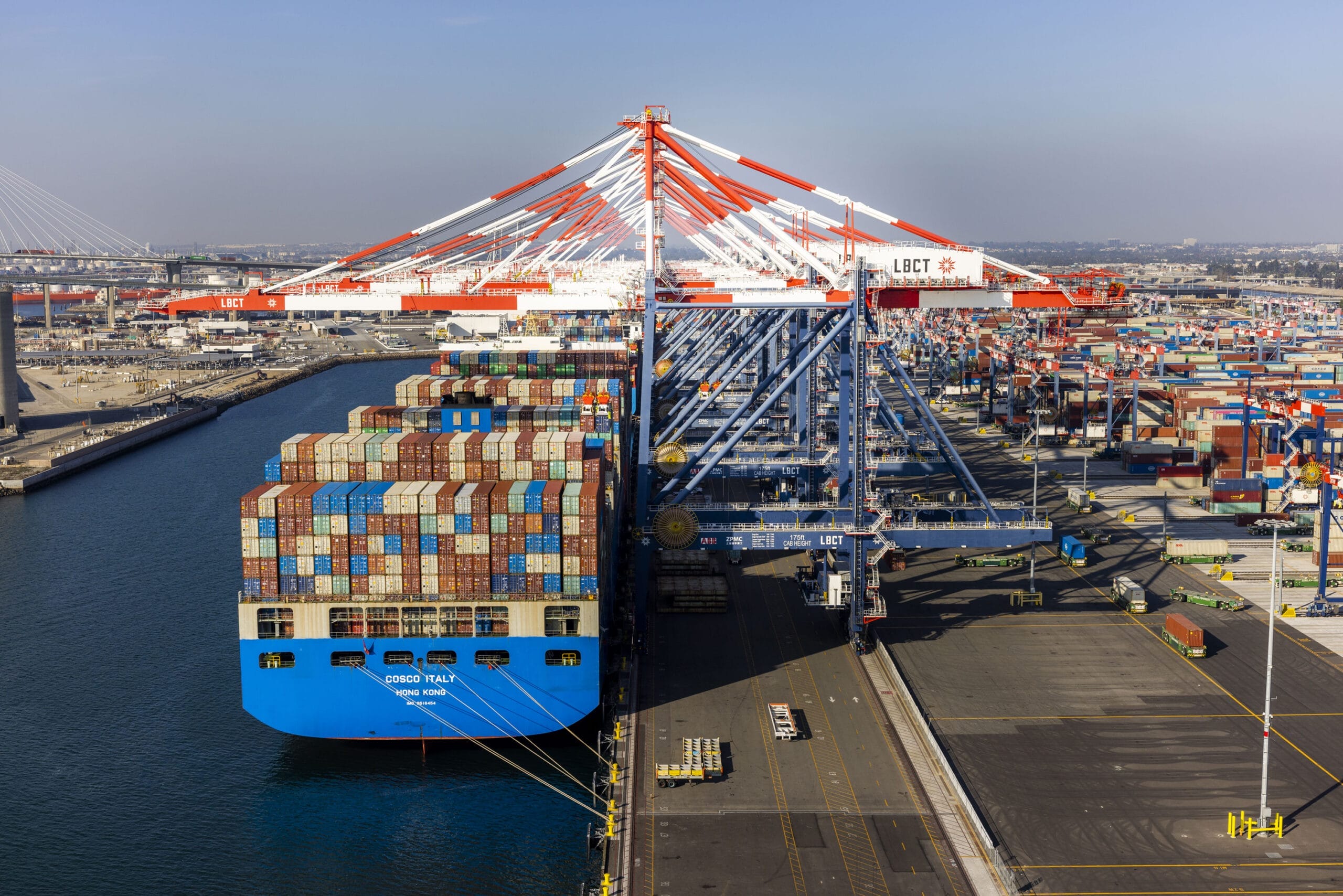
Positioning: Advancing the goal to be the world's greenest and most productive terminal through all-electric spreader technology.
THE CHALLENGE
High-level automation & sustainability
LBCT’s strategic goal is to be the world’s greenest and most productive terminal. Achieving this required equipment that could meet the specific technical demands of a fully automated operation.
High-expectation environment: In a fully automated terminal, failure is not an option; equipment must work continuously to maintain production speeds and avoid slowing down operations.
Performance parity: The project required all-electric spreaders to perform at the same level as, or better than, traditional hydraulic spreaders.
Environmental mandate: The transition to fully electrical spreaders was a core requirement from the beginning of the project spec to align with the terminal's goal of being the "greenest in the world."
THE SOLUTION
All-electric transition
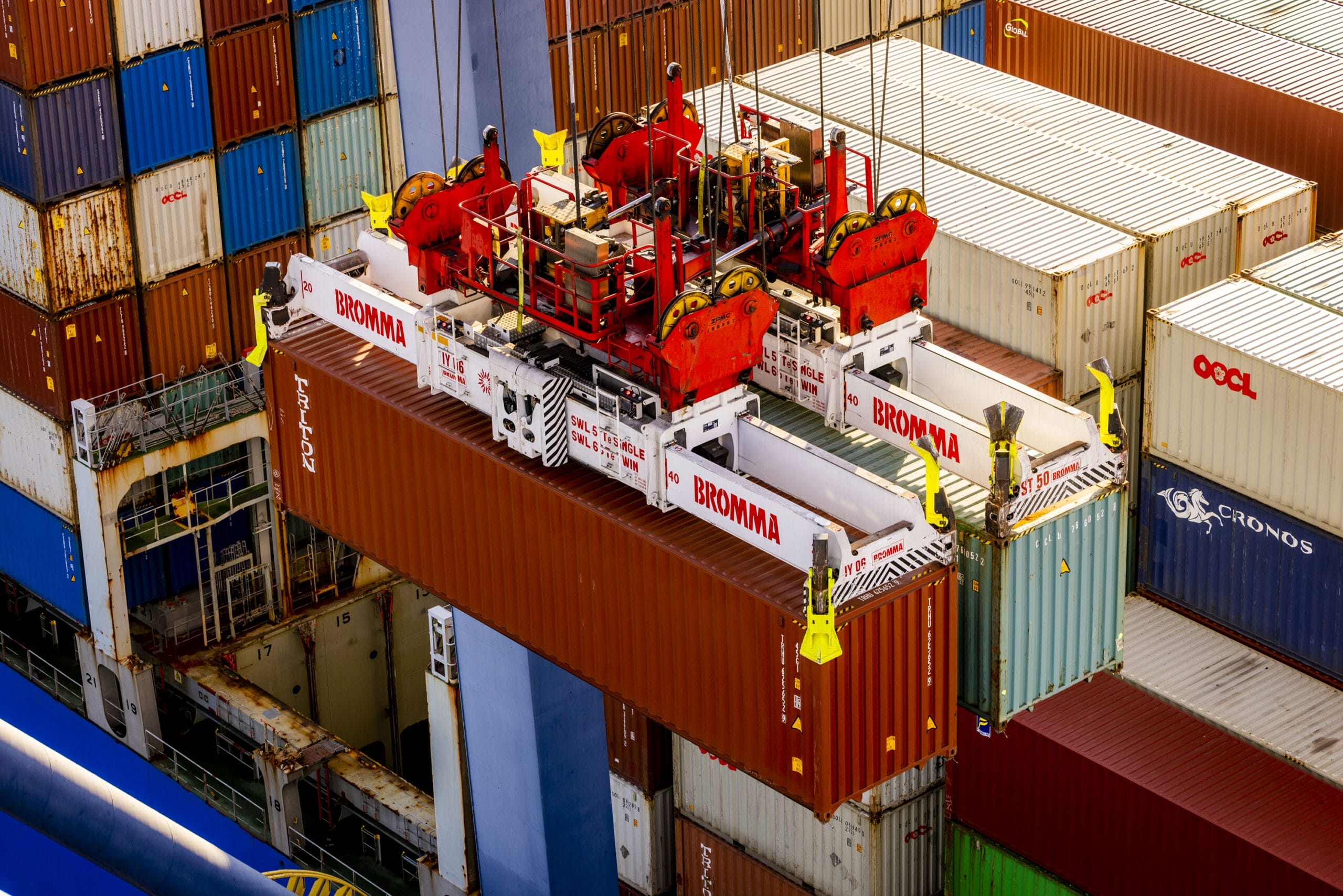
Since 2012, Bromma and LBCT have collaborated on the iterative development and scaling of all-electric spreader technology for high-intensity STS operations.
Technology migration: Scaling proven yard-crane electric technology to the high-intensity STS environment via the Bromma STS45E G2 fleet.
Continuous engineering: A partnership initiated in 2012 to iteratively improve functionality through multiple generations (G2).
Digital diagnostics: Transitioning to an electrical control system to allow for enhanced fault tracing and real-time maintenance data.
The results
The successful scaling of all-electric technology has validated LBCT’s approach to highly sustainable, automated terminal operations. This shift has resulted in a measurable reduction in mechanical complexity and a significant increase in diagnostic transparency across the STS fleet.

Reduced maintenance complexity
By transitioning to all-electric STS45E G2 fleet, LBCT eliminated hydraulic fluids and associated mechanical components.

Data-driven uptime
The transition to an all-electric system provided granular diagnostic data previously unavailable with hydraulic models.

Environmental impact
The removal of hydraulic systems supports LBCT's "greenest terminal" mandate.

Proven reliability & scale
Technology originally proven on yard cranes has maintained performance levels across 14 STS cranes in a high-stakes automated environment.
Customer insight
"An electrical spreader from my point of view is an easier piece of equipment to maintain. You can get a lot of more information out of an electrical spreader when it comes to fault tracing, maintaining the spreader, but also of course, there's no hydraulic fluid or mechanical component to deal with."
— Bjorn Borell, General Manager, Engineering, LBCT

Future-proof your terminal operations
Deliver high-performance production while meeting your terminal’s most ambitious sustainability targets.