
All-Electric STS Spreaders in Action:
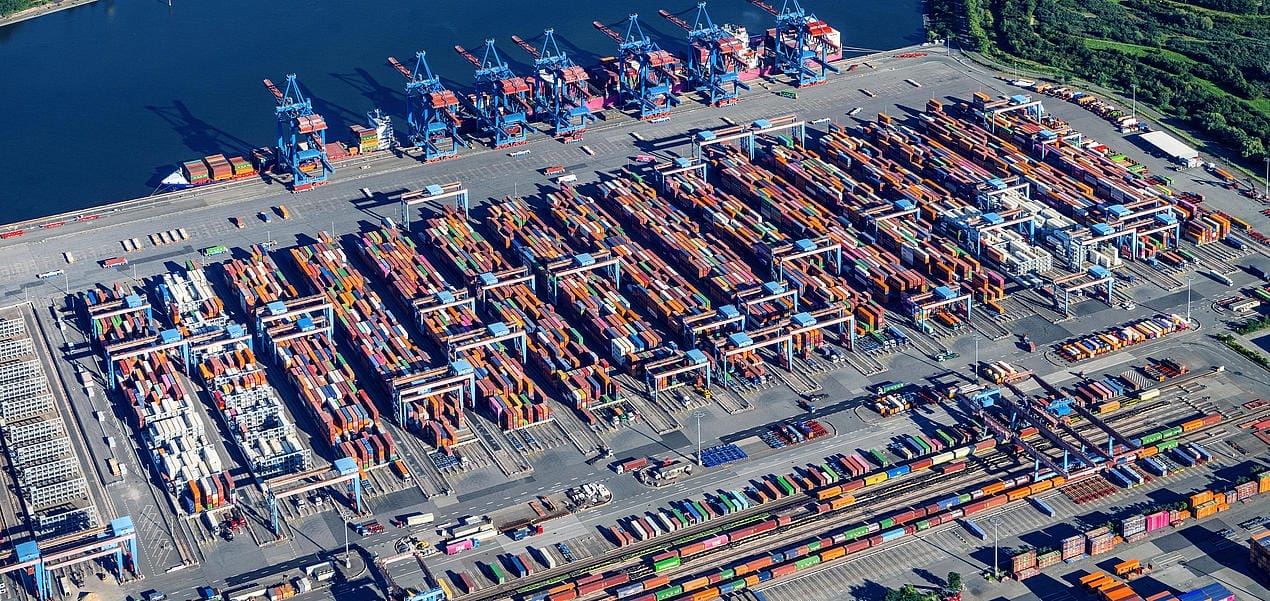
HHLA Container Terminal Altenwerder (CTA), Hamburg
Operational Snapshot

Customer: HHLA Container Terminal Altenwerder (CTA)
Location: Port of Hamburg, Germany
Positioning: Advancing towards Europe’s most automated and CO₂-neutral container terminal through fully electric crane and spreader technology

THE CHALLENGE
High-level automation & sustainability
HHLA Container Terminal Altenwerder is midway through replacing its original STS cranes with a new generation of highly automated, remotely controlled double-trolley units from Liebherr. CTA is also one of the first terminals in Europe working towards CO2-neutral certification—having already electrified its AGV fleet, towing trucks, and yard crane spreaders. The next frontier was the waterside.
High-expectation environment: In a fully automated terminal environment, the cranes have no operator cabin on the main trolley. Equipment must perform reliably and continuously without human intervention at the spreader level.
Performance parity: HHLA CTA required the electric spreaders to match or exceed legacy hydraulic performance in terms of operating speed, structural durability, and overall lifecycle.
Environmental mandate: Eliminating hydraulic oil was a strategic requirement—not just for the carbon supply chain, but to completely remove the risk of oil spills on vessels, the quayside, and into Hamburg harbor.
Skills and maintenance fit: As port equipment becomes more automated and electrified, skilled hydraulic technicians are increasingly difficult to find. HHLA needed a spreader platform aligned with the modern electromechanical skills available to its maintenance teams.
THE SOLUTION
All-electric transition at the waterside
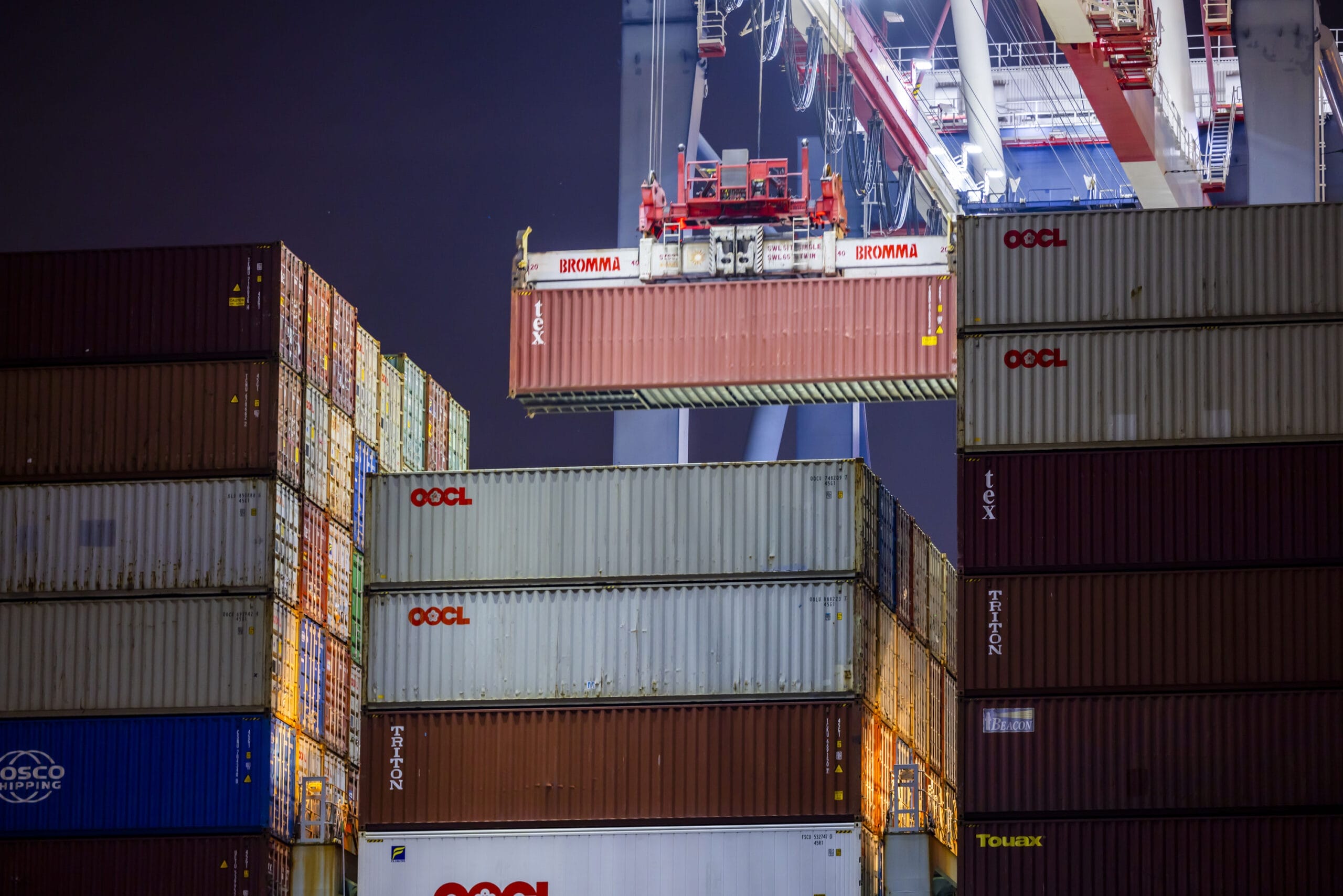
HHLA had already standardized on all-electric spreaders for yard gantry cranes across all its Hamburg terminals. The STS45E G2 represents the extension of that strategy to the waterside and marks the first deployment of Bromma’s second-generation electric STS spreader in Europe.
Technology: Bromma’s STS45E G2 is fully electric, eliminating hydraulic oil entirely and replacing all actuation with electric drives. The spreader’s interfaces are designed to communicate directly with crane automation platforms, enabling precise, repeatable motion control.
Validation: Technical reviews confirmed that the electric flipper drive system delivered the precise torque profile required for CTA’s automated environment, ensuring reliable container gathering without the bulk and complexity of hydraulics.
Integration: The STS45E G2 shares components—including electric motors and PLCs—with Bromma’s electric yard crane spreaders already operating at CT

The results
Validated performance across automation, maintenance, and sustainability
The combination of zero hydraulic content, automation-compatible control interfaces, and shared componentry with the yard fleet has validated CTA’s all-electric waterside strategy.

Lower energy consumption by design
With a hydraulic spreader, the pump runs continuously regardless of activity. An electric spreader draws power only when actively operating its motors. The STS45E G2 delivers a substantial reduction in spreader energy consumption compared to a hydraulic equivalent.

Significantly lower maintenance burden
Electric spreaders eliminate hydraulic oil changes, filter replacements, and the full hydraulic hose replacement cycle. Based on these early indicators, HHLA’s projections confirm that maintenance hours will be significantly lower over the spreader’s 15–20 year lifecycle.

Maintenance workforce alignment
Electric spreaders share components and troubleshooting logic with other terminal equipment, reducing dependence on specialized hydraulic technicians. Engineering teams noted that technicians entering the workforce today focus primarily on electronics and automation rather than legacy hydraulics—making electric spreaders the natural fit for CTA’s future maintenance organization.

Cycle time benefit from simultaneous telescope and flipper operation
The STS45E G2 can telescope at full speed while simultaneously operating the flippers. This capability reduces cycle times during automated operations when both actions are required at once, matching or exceeding legacy hydraulic performance.
Customer insight
"The shift from hydraulic to fully electric spreaders has a clear operational logic. Hydraulic maintenance is becoming more demanding—not just in terms of cost, but in finding the right skills. Electric spreaders remove that challenge. Combined with the seamless compatibility with our high-automation crane systems, the STS45E G2 was the right choice for CTA. Electrification is a journey we are already on across our AGVs and yard cranes; extending it to the waterside is the natural next step."
— Daniel Rademacher, Engineer for Cargo Handling Equipment, HHLA Technik GmbH

LOOKING AHEAD
A blueprint for Hamburg and beyond
CTA is confident the STS45E G2 can also perform exceptionally well in non-automated terminals where operators sit in the crane cabin. Based on the successful deployment at CTA, Rademacher sees no barrier to adoption at HHLA’s other Hamburg terminals.
In fact, operators in manual environments will gain an additional operational benefit: a significantly quieter working environment, as the noisy hydraulic pumps are completely eliminated.
CTA has effectively become a reference installation for the industry. The question for modern ports is no longer whether to electrify the waterside, but when.
Future-proof your terminal operations
Deliver high-performance production while meeting your terminal’s most ambitious sustainability targets.